Saving forests, safeguarding the future
Forests are vital – for the climate, the economy and society. They are central to a sustainable economy, to preserving biodiversity and to managing the climate crisis. Below we present an overview of this core ecosystem.

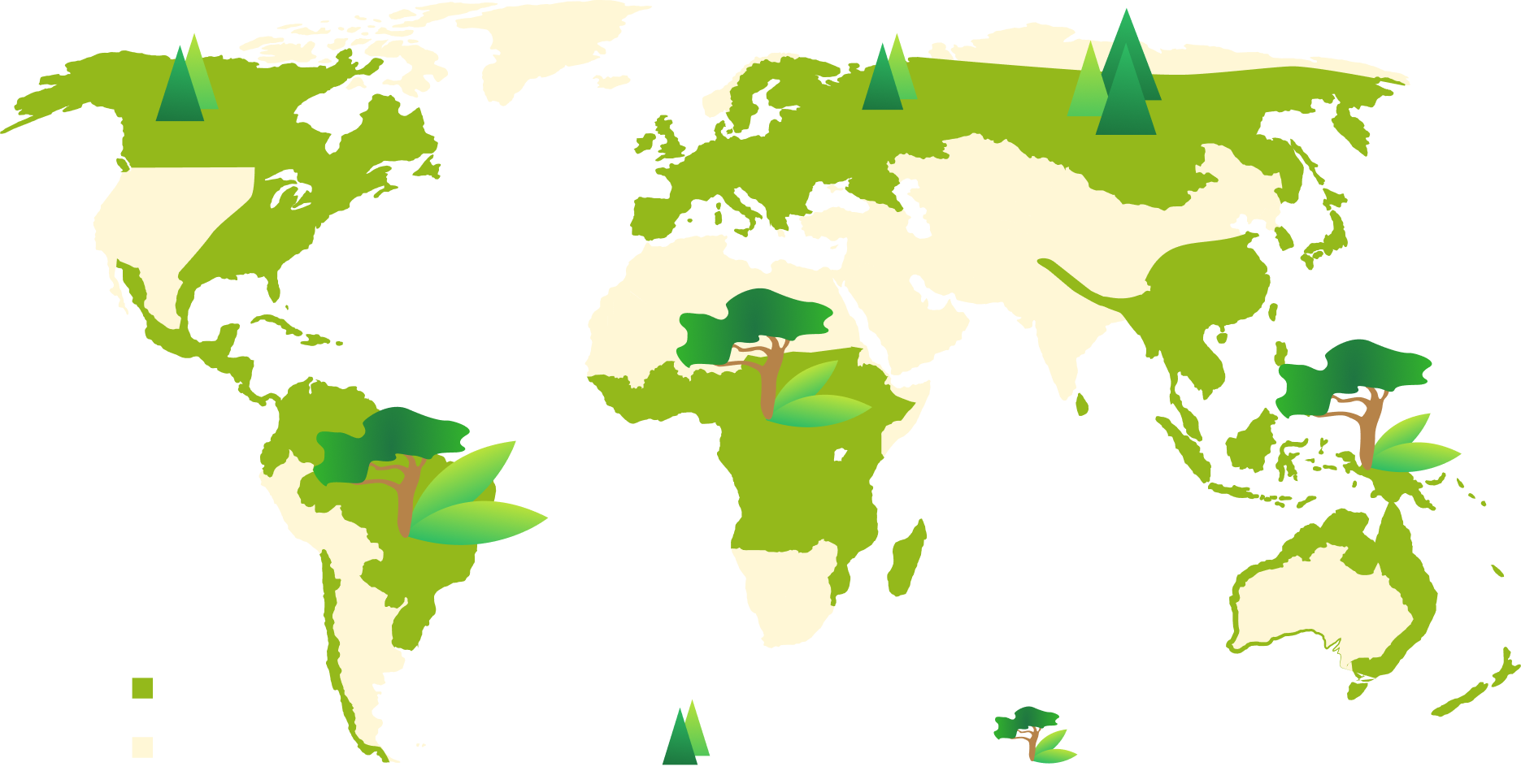


At their greenest
Forests cover over four billion hectares of our planet – almost a third of the land surface. They provide habitats, secure livelihoods, filter particulate matter from the air and serve as vast carbon sinks. Rainforests cover around 7% of the planet’s land surface and are home to around half of all animal and plant species currently in existence. The largest contiguous rainforest stretches across the Amazon Basin in South America.
Sources: FAO, Global Forest Resources Assessment 2025; Statista
Measuring the value of nature
The value of a forest’s impact can be quantified: what are referred to as ‘forest ecosystem services’ (habitat, water supply, recreation, hunting and non-timber forest products) were estimated to be worth USD 7.5 trillion in 2018, the equivalent of around 9% of global gross domestic product. Timber products were not included in this estimate.
Source: FAO


have been protected, restored or sustainably managed with the support of German development cooperation.
Source: GIZ
Saving the forest
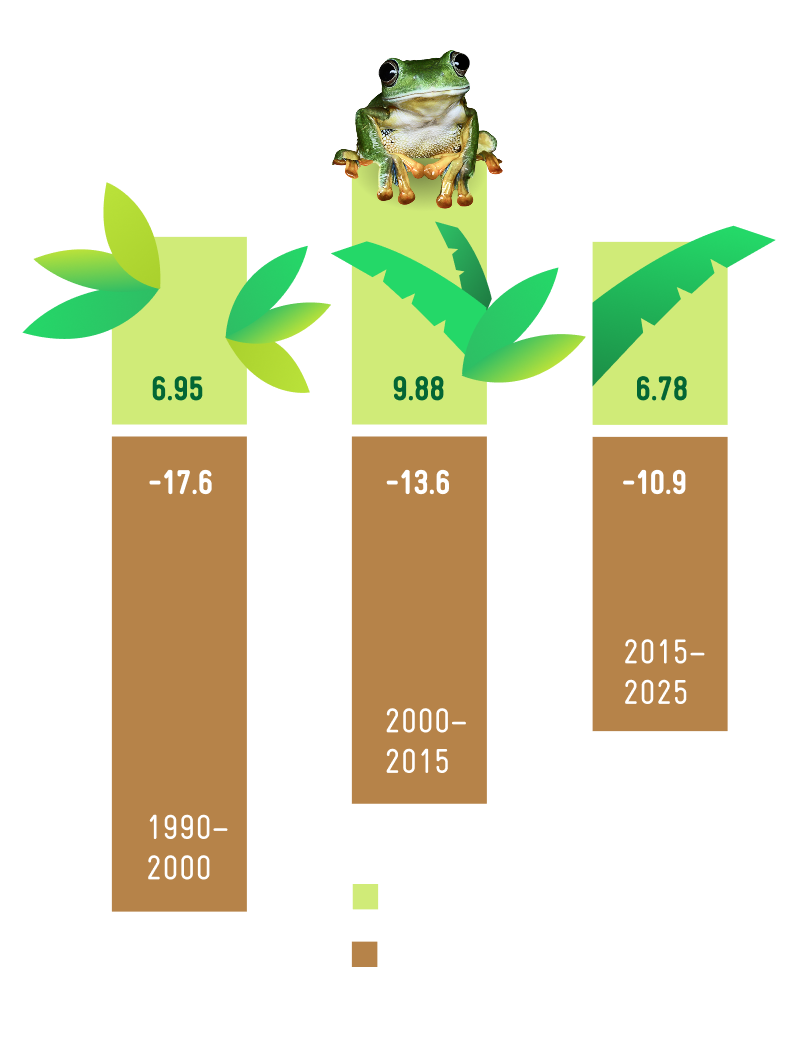
The rate of deforestation has slowed. It has fallen from 13.6 million hectares a year in the period from 2000 to 2015 to 10.9 million hectares per year in the period from 2015 to 2025. Net forest loss over the past ten years totalled 4.12 million hectares per year (compared with 10.7 million hectares per year between 1990 and 2000). Net loss accounts for both cleared and reforested areas.
Sources: FAO; GIZ
The danger of wildfires
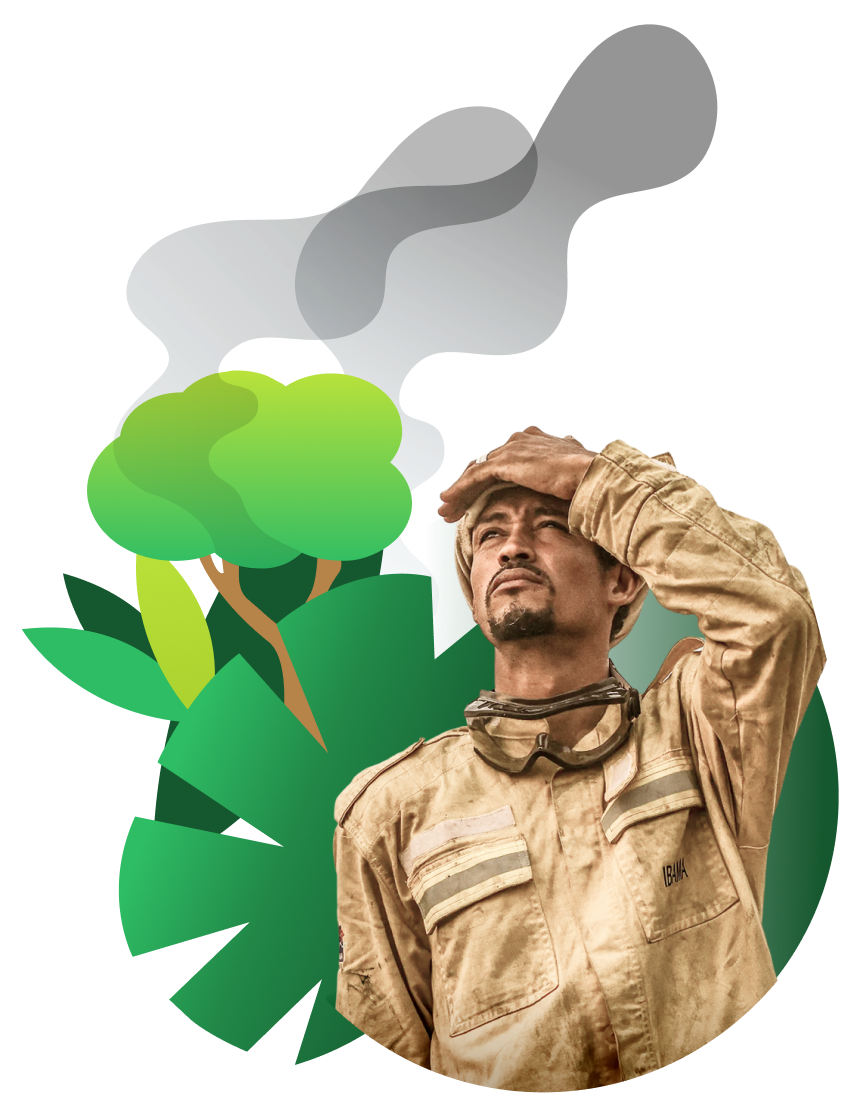
Wildfires are becoming a bigger threat for forests. Some are the result of climate change-driven impacts, such as drought and aridity. Others are set by people, including for illegal logging. In the countries of the Amazon region alone, fires released greenhouse gases equivalent to 791 million metric tonnes of carbon dioxide in 2024, more than Germany emits in a year.
That’s why the Amazon Fund focuses on firefighting, among other measures: GIZ is providing support to Brazil to advance fire protection. Together with partners, GIZ has helped to ensure the early containment of around 33,000 fires before they could spread.
Carbon sequestration heroes
Alongside forest ecosystems, seas and oceans are among the largest global carbon sinks. They absorb from the atmosphere around a third of the carbon dioxide emissions produced by humankind.
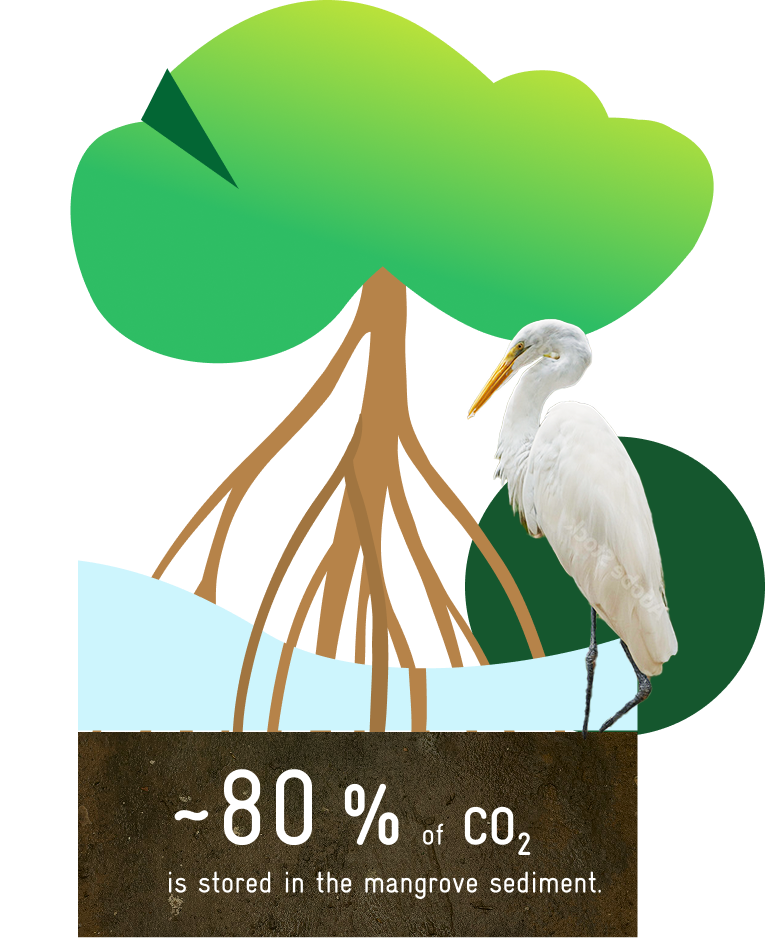
Coastal ecosystems such as mangroves are particularly efficient in storing carbon in their sediment. Scientists estimate that mangrove soils hold three to five times more carbon on average than tropical rainforest soils.
Sources: German Environment Agency; Helmholtz KLIMA dialogue platform
© Photos: Marcelo Camargo/Agência Brasil, Adobe Stock, Freepik
© Collages: 3st kommunikation


